TSH, T3, and T4 are three hing. TSH is produced by your brain and acts as a control signal. If it is high, your thyroid is underactive. If it is low, your thyroid is overactive. T4 and T3 are the hormones your thyroid actually makes, and they regulate energy, metabolism, and body temperature. A number outside the normal range does not automatically mean something serious. This guide walks through what each number means and what to do next.
You Got Your Thyroid Report. Now What?
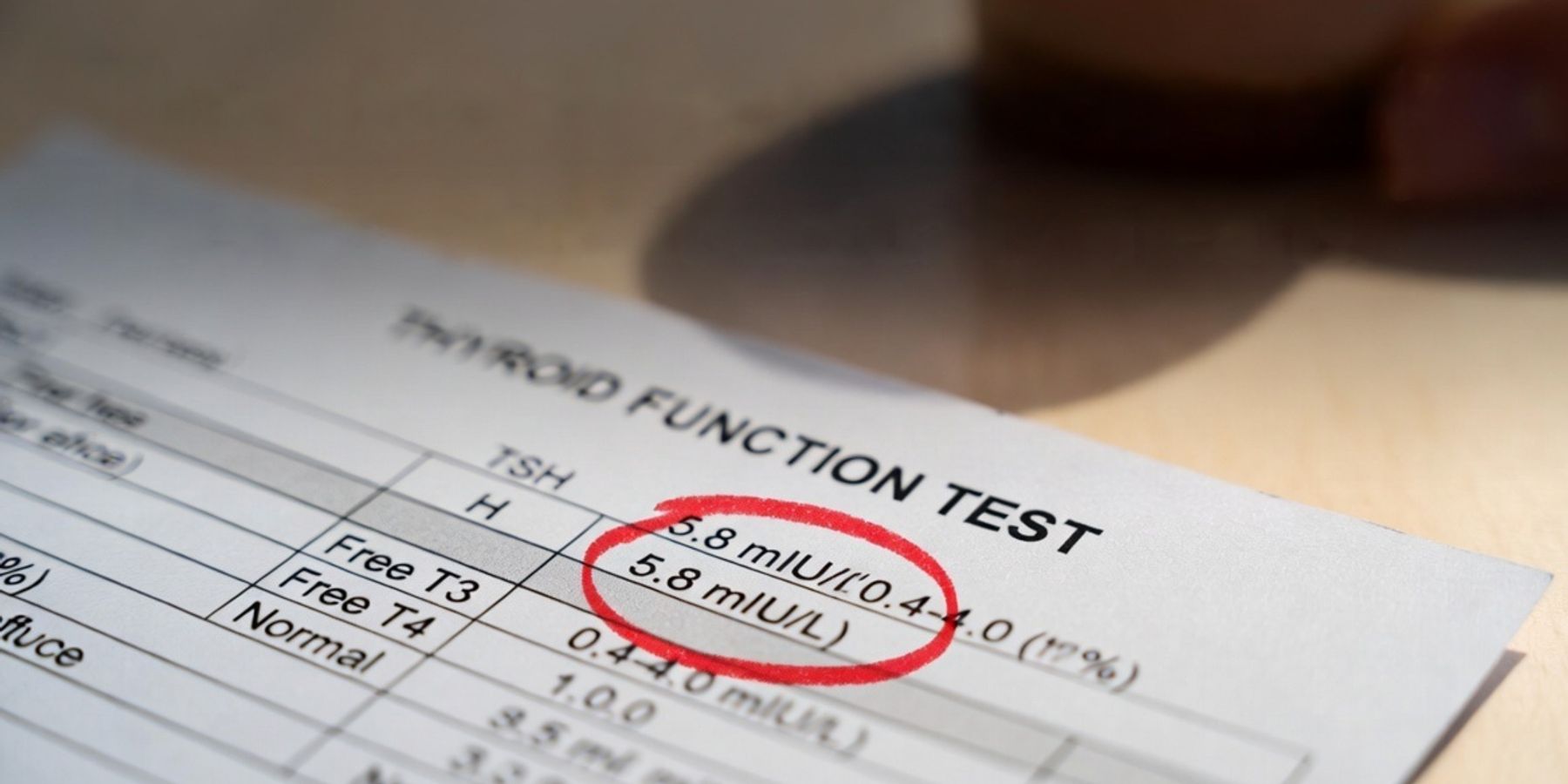
You went for a blood test. The doctor said check your thyroid. The report came back with three rows of numbers: TSH, T3, T4 and one or two of them have an H or L flag next to them.
Your first instinct was probably to Google it. And now you are here, trying to figure out what it all means before you can see the doctor.
This guide will explain everything from scratch. No medical background needed. By the end, you will know exactly what each number means, why it matters, and what questions to ask your doctor.
What We Cover in This Guide
- What is the thyroid and why does it matter?
- What is TSH and what does your TSH number mean?
- What are T3 and T4 and how do they fit in?
- Normal reference ranges and why they differ between labs
- Common patterns you might see on your report
- What happens next and what to ask your doctor
First: What Is the Thyroid and Why Do Doctors Test It?
Your thyroid is a small, butterfly-shaped gland that sits at the front of your neck, just below your Adam's apple. It is roughly the size of your thumb and most people never notice it is there until something goes wrong.
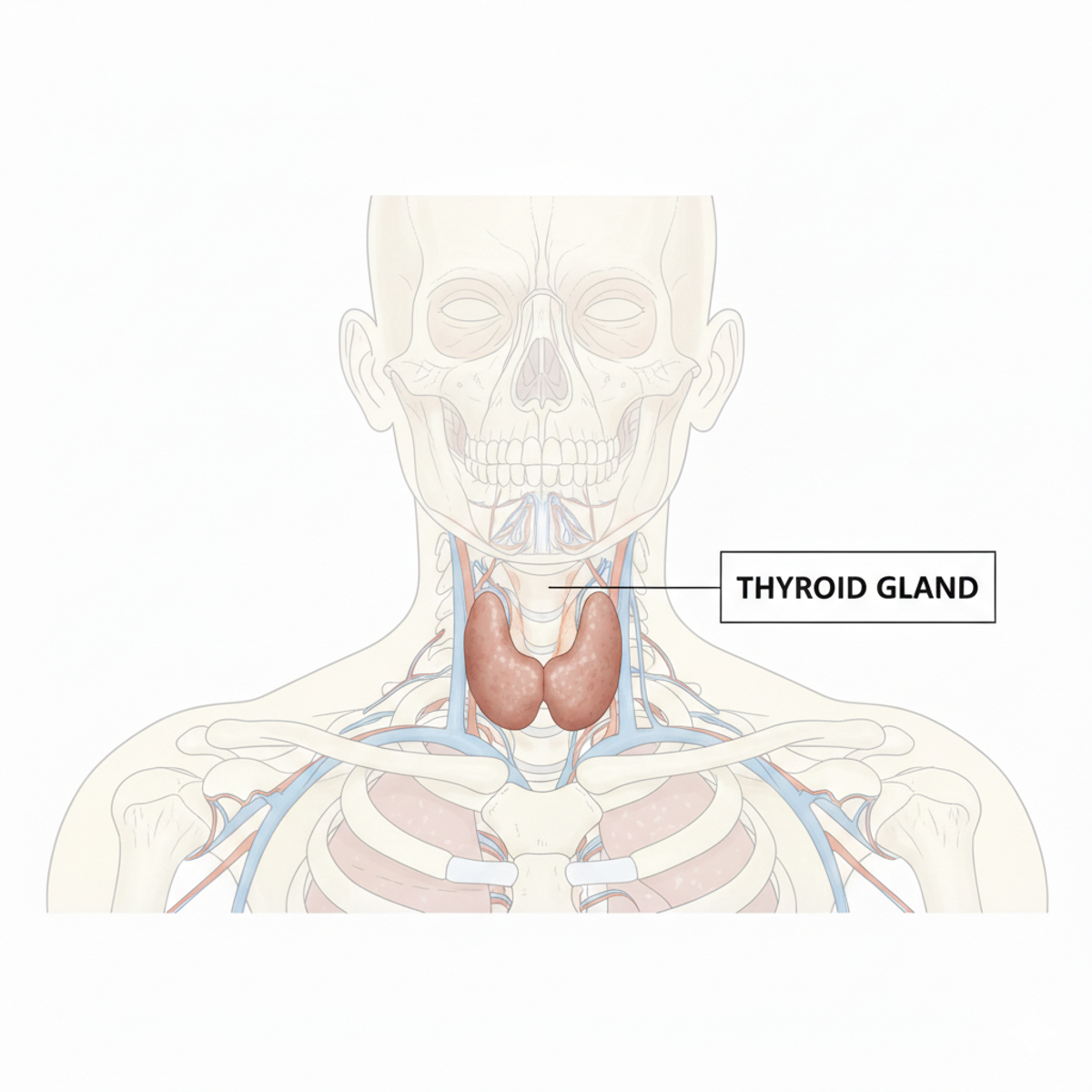
The thyroid's main job is to produce hormones that control how your body uses energy. Think of it like a thermostat. It decides how fast or slow your body runs, your heart rate, your metabolism, your body temperature, how quickly you burn calories, even how your mood feels on a given day.
When the thyroid is working well, you feel normal. When it is too active or too slow, a whole range of symptoms show up, including weight changes, fatigue, hair loss, feeling cold all the time, anxiety, and irregular periods.
The thyroid function test, sometimes written as TFT on your report, checks whether your thyroid is doing its job properly. It measures three things: TSH, T3, and T4.
TSH : Thyroid Stimulating Hormone (The Control Signal)
What TSH actually is
TSH stands for Thyroid Stimulating Hormone. Here is the thing though: TSH is not produced by the thyroid itself. It is produced by a small gland in your brain called the pituitary gland.
Think of it this way. Your brain is the boss and your thyroid is the worker. When the brain notices that thyroid hormone levels in your blood are getting low, it sends TSH as a message to the thyroid to produce more hormones. When thyroid levels are already high enough, the brain sends less TSH.
This is why TSH is such a useful test. It tells you what your brain thinks about your thyroid levels, and your brain is constantly monitoring this.
What a high TSH means
If your TSH is high, it means your brain is sending strong signals to the thyroid to work harder. This happens when the thyroid is not producing enough hormone on its own.
A high TSH usually points to an underactive thyroid. Doctors call this hypothyroidism. The thyroid is sluggish and not keeping up with what the body needs.
Common symptoms that go with this: feeling tired all the time, gaining weight even without eating more, feeling cold when others are not, dry skin, hair thinning, constipation, and low mood.
What a low TSH means
If your TSH is low, it means your brain has stopped sending strong signals because there is already too much thyroid hormone in the blood.
A low TSH usually points to an overactive thyroid. Doctors call this hyperthyroidism. The thyroid is working overtime.
Common symptoms: feeling anxious or restless, losing weight without trying, heart beating fast or irregularly, feeling hot and sweaty, difficulty sleeping.
Simple way to remember it: High TSH means the thyroid is working too slowly. Low TSH means the thyroid is working too fast. TSH always moves in the opposite direction to what your thyroid is actually doing.
T4 and T3 : The Hormones Your Thyroid Actually Makes
What T4 is
T4 stands for Thyroxine. This is the main hormone your thyroid produces. Your report might show two versions of T4: Total T4 and Free T4, also written as FT4.
Free T4 is the part of thyroxine that is actually available for your body to use. Total T4 includes both the free portion and the portion that is bound to proteins in the blood and not immediately usable.
Most doctors pay closer attention to Free T4 because it reflects what your body is actually working with.
What T3 is
T3 stands for Triiodothyronine. It is the more active form of thyroid hormone. Most T3 in your body is actually converted from T4. Your thyroid makes some T3 directly, but a large portion is made by other organs converting T4 into T3.
T3 is significantly more potent than T4. When doctors talk about thyroid hormone affecting your metabolism, it is mostly T3 doing the work.
Your report may also show Total T3 and Free T3, written as FT3. Free T3 is the one that matters most clinically.
How TSH, T4, and T3 work together
Here is the full picture:
- Your brain releases TSH
- TSH tells your thyroid to produce T4
- T4 travels through your blood and gets converted to T3 in various organs
- T3 does the actual work, regulating energy, metabolism, and temperature
- When T3 and T4 levels are sufficient, the brain reduces TSH
- When T3 and T4 levels drop, the brain increases TSH
It is a continuous feedback loop. That is why looking at all three numbers together tells a much clearer story than looking at just one.
Normal Ranges and Why Your Lab's Numbers Might Look Different
Different labs use slightly different ranges for what counts as normal. The ranges depend on the equipment they use, the population they calibrated against, and the testing method. Your report's reference range is the one that applies to you, not a number you find on a random website.
That said, here are the approximate ranges most labs in India use for adults who are not pregnant:
| Test | Normal Range (Adults) | What It Measures |
|---|---|---|
| TSH | 0.4 to 4.0 mIU/L | Brain's signal to the thyroid |
| Free T4 (FT4) | 0.8 to 1.8 ng/dL | Main thyroid hormone, usable form |
| Free T3 (FT3) | 2.3 to 4.2 pg/mL | Active thyroid hormone |
| Total T4 | 5.0 to 12.0 mcg/dL | Total thyroxine in blood |
| Total T3 | 80 to 200 ng/dL | Total triiodothyronine in blood |
Common Patterns You Might See on Your Report
Pattern 1: High TSH, Low T4 — Classic Underactive Thyroid
This is one of the most common thyroid conditions in India, particularly among women. Doctors call it primary hypothyroidism.
The brain is sending maximum signals because the thyroid is not making enough T4. TSH goes up, T4 goes down.
Most people with this pattern are started on a tablet called levothyroxine, which is a synthetic version of T4. It is a once-a-day tablet that most people take long term, and the dose gets adjusted based on follow-up blood tests until TSH settles into the normal range.
Pattern 2: Low TSH, High T4 or T3 — Overactive Thyroid
Here the thyroid is producing too much hormone. TSH is low because the brain is trying to slow things down, but the thyroid is not responding.
This could be due to a condition called Graves' disease, which is an autoimmune condition where the immune system mistakenly stimulates the thyroid, or sometimes a nodule on the thyroid that independently produces too much hormone.
Treatment options include medication to block thyroid hormone production, radioactive iodine therapy, or in some cases surgery. Your endocrinologist, which is a specialist in hormonal conditions, will recommend what suits your situation.
Pattern 3: High TSH, Normal T4 — Subclinical Hypothyroidism
This is a grey area that often causes confusion. The TSH is slightly elevated but the T4 is still within the normal range. The thyroid is working harder than it should but still managing for now.
Whether to treat this or just monitor depends on your TSH level, your symptoms, your age, and whether you are pregnant or planning to be. Some people with this pattern feel completely fine and just need annual blood tests. Others have symptoms that make treatment worthwhile.
Pattern 4: Normal TSH, Normal T4 — All Good
Both in range. Your thyroid is working as it should.
If you still have symptoms, the issue may be something else entirely, like iron levels, vitamin B12, or vitamin D. Worth discussing with your doctor if symptoms continue.
A Quick Word on Hashimoto's Thyroiditis
You might come across this term if you are being investigated for an underactive thyroid, especially if you are a woman.
Hashimoto's thyroiditis is an autoimmune condition where the immune system gradually attacks the thyroid gland. It is the most common cause of hypothyroidism in India.
If your doctor suspects Hashimoto's, they might also order a test called Anti-TPO antibodies, which stands for Anti-Thyroid Peroxidase antibodies. Elevated anti-TPO antibodies alongside a high TSH is a typical pattern in Hashimoto's.
Managing Hashimoto's is similar to managing hypothyroidism. Levothyroxine is usually prescribed and thyroid levels are monitored regularly with blood tests.
So You Got Your Report. Here Is What to Do Next.
How things actually work in India
In most parts of India, you do not wait five days for a specialist appointment when something is worrying you. You walk into your neighbourhood clinic or see your family doctor within a couple of hours. That is the realistic picture here.
Your family doctor or a general physician can read a basic thyroid report and give you an initial assessment right away. If your numbers are significantly off or your symptoms are more complex, they will refer you to an endocrinologist for further evaluation.
Do not sit on a report that is worrying you. You have options close by.
Questions to ask your doctor
Take this list with you:
- Are my TSH, T3, and T4 levels something we need to treat, or just monitor for now?
- Could my current symptoms be connected to these thyroid results?
- Do I need additional tests like anti-TPO antibodies or a thyroid ultrasound?
- If I need medication, what does the treatment look like and how often will I need to retest?
- Are there any lifestyle factors like iodine intake or stress that could be affecting my results?
- If I am planning a pregnancy, does my thyroid level need to be in a specific range beforehand?
Frequently Asked Questions
My TSH is 5.2 and the range says up to 4.0. Do I have thyroid disease?
Not necessarily. A mildly elevated TSH is often monitored first with a repeat test rather than immediately treated. Your doctor will consider your T4 level, symptoms, and other factors before deciding.
My T4 is normal but my TSH is high. Should I be worried?
This is called subclinical hypothyroidism. Your thyroid is still managing but working harder than it should. Whether it needs treatment depends on your TSH level and whether you have symptoms.
Can I eat before a thyroid blood test?
Yes. Thyroid tests do not require fasting. If you are already on thyroid medication, most doctors recommend testing before your morning tablet.
Why does my TSH value look different from what I found online?
Every lab uses its own reference range based on its equipment and population. Always read your result against the range printed on your own report.
How often should I get my thyroid retested?
If you are on medication, typically every 3 to 6 months while the dose is being adjusted, then every 6 to 12 months once it is stable.
Can stress affect my thyroid results?
Yes, it can. Severe physical stress or illness can temporarily shift TSH levels. If your result looks off but you were unwell recently, your doctor may ask you to repeat the test once you have recovered.
My doctor said my thyroid is borderline. What does that mean?
It usually means your results are slightly outside the normal range but not significantly enough to need treatment right away. Your doctor will likely suggest a repeat test in a few months to see if the values change.
Still Not Sure What Your Specific Report Means?
Reading reference ranges and comparing them to your numbers is a start. But your report has specific values, specific flags, and a context that a general guide cannot fully address.
FlexReport's engine breaks down every row in your report individually. It explains what your specific number means, not just what the test measures in general. No jargon, no confusing medical language. Just a clear, plain-English explanation of your actual results and the right questions to carry into your next doctor's visit.