You went in for a scan because your knee was hurting. Or maybe you had a routine corporate health checkup. The scan is done, the report arrives on WhatsApp two hours later, and somewhere in the middle of all that medical language, there is a line that says something like:
an incidental 8mm hypodense lesion noted in the right lobe of the liver
Your knee is fine. But now there is this.
That is an incidental finding. And if you have never heard that term before, your brain probably went to the worst place immediately.
This article explains what an incidental finding actually is, why it shows up so often, what it almost always means, and what you should actually do when you see one in your report.
What Is an Incidental Finding in a Medical Report?
An incidental finding is something the radiologist noticed in your scan that was not what the scan was ordered for.
You came in for one thing. The imaging picked up something else. That something else is the incidental finding.
The term comes from the Latin word incidens, meaning "falling upon." In medicine, it has stuck around to describe any abnormality that is discovered by chance, without any symptoms pointing to it.
It is also sometimes called an incidentaloma, particularly when the finding is a small mass or growth that was not expected. The word sounds alarming but it is just medical shorthand for "we found a small something while looking for something else."
Here is the key thing to understand before you read anything else in this article: an incidental finding is not the same as a diagnosis. It is an observation. It is the radiologist saying, "I noticed this while reading your scan." What that observation means clinically, whether it needs attention, and what to do about it, is a separate question entirely. That is what your doctor is for.
Why Do Incidental Findings Happen So Often?
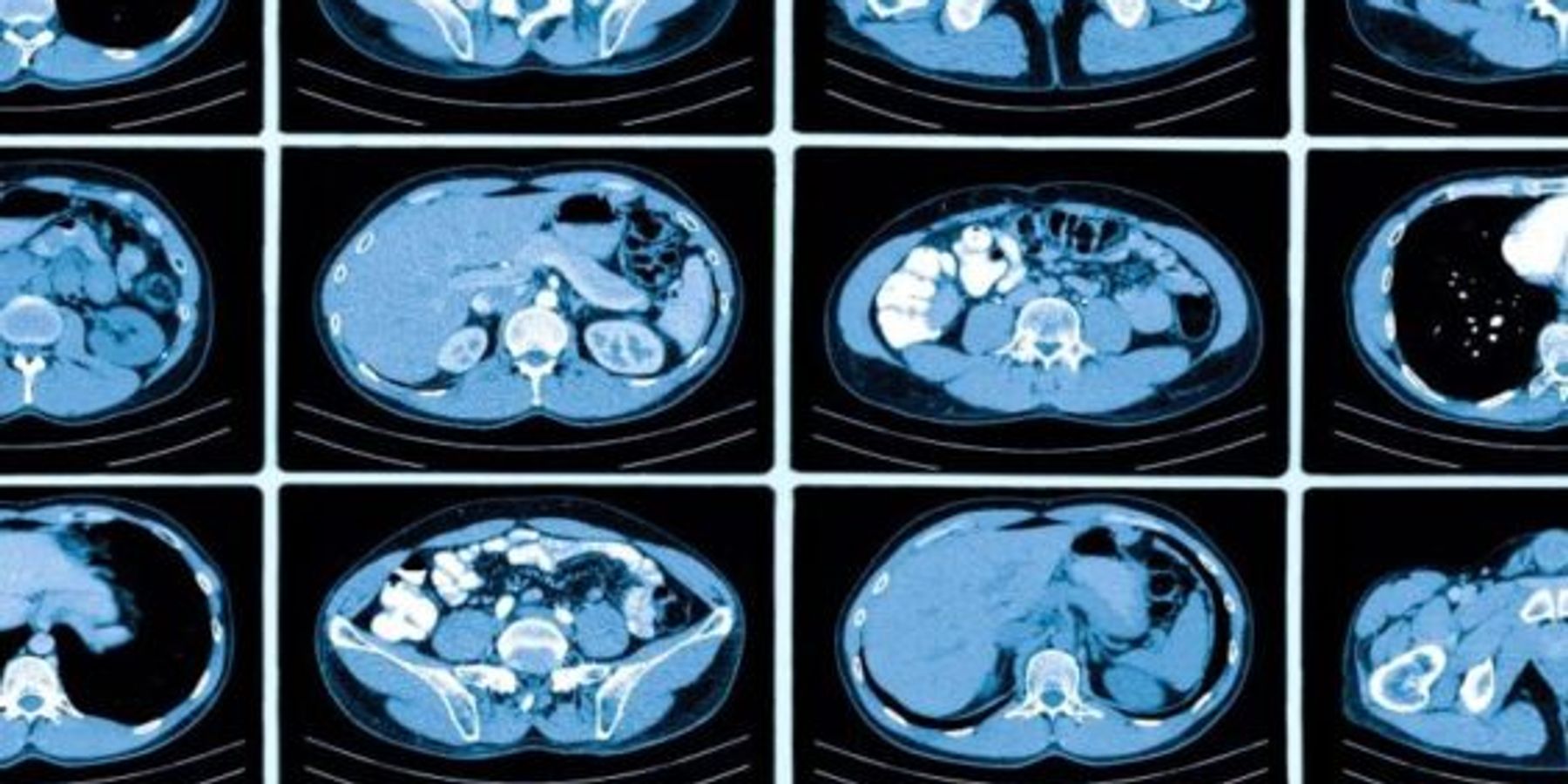
Modern CT scans and MRIs are extraordinarily detailed. A CT scan of your abdomen is not just looking at your stomach or your intestines. It is capturing cross-sectional images of everything in that region, your liver, kidneys, adrenal glands, spleen, pancreas, blood vessels, lymph nodes, and more.
When imaging technology becomes that precise, it sees everything. Including small variations that have always existed in the body but were never visible before.
Studies have found that in adults over 50 who get a CT scan, some kind of incidental finding appears in the majority of scans. One large study found incidental findings in over 50% of CT scans done for unrelated reasons. That is not a disease epidemic. That is technology getting better at seeing things that were always there.
A good way to think about it: imagine you had a tiny camera that could look through walls. If you pointed it at your home and your neighbor's home and the home two streets down, you would probably notice cracks in plaster, pipes slightly out of alignment, old electrical wiring. None of that means the house is about to collapse. Some of it needs monitoring. A very small fraction might actually need fixing.
That is basically what modern imaging does to the human body.
The Most Common Incidental Findings in India
India has seen a massive rise in CT scans and MRIs over the last decade. Private diagnostic chains, corporate health checkups, and accessible imaging centers in every major city mean more Indians are getting scanned than ever before. And with more scans comes more incidental findings.
The most common ones radiologists report in Indian patients include:
Liver findings. Small hypodense lesions, cysts, or haemangiomas in the liver are extremely common. The liver is a large, complex organ and small variations in its tissue appear regularly. The overwhelming majority are simple cysts or benign growths that need no treatment.
Kidney findings. Small renal cysts are one of the most frequently seen incidental findings across all age groups, and especially in patients over 40. Most are simple cysts, classified as Bosniak Category I, which are completely benign and require no follow-up.
Adrenal findings. A small adrenal nodule or incidentaloma is found in roughly 3 to 4 percent of all abdominal CT scans. The majority of these are benign non-functioning adenomas, which essentially means they are harmless lumps that are not producing any hormones or causing any problems.
Lung findings. In chest CT scans, small pulmonary nodules under 6mm are commonly found and in non-smokers with no risk factors, the vast majority are completely benign. They are often scar tissue from old infections, and India's high historic burden of TB means this is particularly common in Indian patients.
Thyroid findings. Thyroid nodules are found incidentally in a huge portion of neck scans and even some chest scans. Most are benign. Thyroid cancer when it does occur is usually slow-growing and highly treatable.
Ovarian cysts. Small functional cysts in women of reproductive age are extremely common and often resolve on their own within one or two menstrual cycles.
What "Needs Further Evaluation" Actually Means
This phrase is probably responsible for more unnecessary midnight panic than almost anything else in radiology reports.
When a radiologist writes "further evaluation recommended" or "clinical correlation advised," they are not saying something is wrong. They are saying: I have done my job, which is to describe what I see on the imaging. Now a clinician needs to look at this in the context of your full medical history, your symptoms, and possibly additional tests.
Radiologists do not know your history. They do not know whether you had TB ten years ago, whether you smoke, whether your family has a particular health pattern. They read images. When something is unclear from the image alone, they pass it to your doctor to put it in context.
Think of the radiologist as a very precise observer who was handed a photograph without any background information. They describe what they see accurately. They do not know the story behind the photograph. Your doctor does.
The Spectrum from Nothing to Something
Not all incidental findings are equal. They sit on a spectrum, and your report usually gives you clues about where on that spectrum your finding falls.
Definitely benign, no action needed. Words like "simple cyst," "likely benign," "no suspicious features," or "Bosniak Category I" are telling you the radiologist sees nothing concerning. These findings are often not even mentioned by doctors in follow-up appointments because they do not require any attention.
Probably benign, monitoring suggested. This is the middle category. The finding is most likely nothing, but because imaging cannot always be 100% certain without additional context, the radiologist recommends a follow-up scan in six or twelve months. This is not an alarm bell. It is a precaution. Think of it like a doctor saying "let's just keep an eye on it."
Indeterminate. The imaging cannot confirm what it is. This is when additional tests are recommended, sometimes a different type of scan, sometimes a blood test, sometimes a biopsy. Indeterminate means we need more information, not that something bad is happening.
Needs urgent attention. This is rare in the context of incidental findings, but it does happen. Features like rapid growth, irregular edges, or surrounding tissue involvement may prompt the radiologist to recommend urgent clinical review. If your report says something like "urgent clinical correlation required," that is the time to see a doctor the same day.
Most incidental findings fall into the first two categories.
What Most Indians Do When They Find This in Their Report
Here is where the Indian experience is actually quite different from what happens in Western countries, and honestly, in this case, the Indian way is better.
In the UK or US, a patient might receive a report, see something alarming, and then wait five to seven days for a GP appointment to ask about it. That waiting period is genuinely horrible. Five days of uncertainty with a report you cannot understand is a long time to spend anxious.
In India, that is not what happens. You get the report on WhatsApp. You read it. You immediately call your family doctor, the one who has been treating you for years. If they are not available, you walk to the nearest clinic. In most urban Indian neighborhoods, you can be sitting in front of a doctor within two hours of receiving your report.
And that is genuinely the right thing to do.
The problem is not the speed of getting to a doctor. The problem is the two hours in between, when the report is in your hands and the doctor is not yet in front of you. That window is where the anxiety lives. That is when you are reading the words "incidental finding" and Googling "hypodense lesion liver dangerous" and going down a path that usually ends somewhere much scarier than where it started.
What helps in that window is not more Google. It is a clear, simple breakdown of what the words in your specific report actually mean, before you walk into that clinic. So that when you sit in front of your doctor, you are asking the right questions instead of trying to understand the report from scratch with them.
Questions to Ask Your Doctor When You Have an Incidental Finding
Going to your doctor prepared makes a real difference. Doctors in India, especially in busy private clinics, are often seeing a patient every five to ten minutes. The appointments are short. If you spend the first half of it just understanding what the report says, you lose the time you could be spending on what actually matters, which is what to do next.
Here are the questions worth asking:
1. Is this finding related to the reason I got this scan, or is it completely separate? This establishes context. Some incidental findings are actually relevant to your symptoms even if they were not expected. Others have nothing to do with what you came in for.
2. What is the most likely explanation for this finding given my age, my history, and my lifestyle? Your doctor knows you. The radiologist does not. This question brings your personal context into the interpretation.
3. Does this need any further testing, or can we just keep an eye on it? This tells you whether action is needed now or whether watchful waiting is appropriate.
4. If monitoring is recommended, what am I watching for? When should I be concerned? If your doctor says "let's repeat the scan in six months," ask what change in symptoms or findings would make them want to move faster.
5. Is there anything I should change in my diet, habits, or medication while we monitor this? Occasionally an incidental finding will prompt a lifestyle discussion. It is worth asking.
6. What is the worst-case scenario for this finding, and how likely is it? Some people find this question stressful. Others find it the most calming question of all, because the answer is usually much better than what they had imagined.
How to Read This Finding Without Spiraling
The spiral usually starts the same way. You read one phrase in the report. You Google it. The first results are medical journals written for doctors, which are full of words you do not recognize. The second results are forum posts from people who had the same finding and are also scared. Neither of these helps.
Here is a more useful framework for the two hours between receiving your report and seeing your doctor.
Read the impression section first. Every radiology report has an "impression" or "conclusion" section at the bottom. This is where the radiologist summarizes what matters. If the incidental finding was concerning, it will be flagged clearly here. If it is benign or low priority, it will often be mentioned briefly or not at all.
Look for the language the radiologist used. Words like "simple," "likely benign," "no suspicious features," and "no significant change" are reassuring language. Words like "indeterminate," "cannot exclude," or "urgent correlation" are higher-priority language. The tone of the report tells you a lot.
Resist the urge to look up just the finding name. "Adrenal nodule" typed into Google will give you a range of results from benign to serious, with no way for you to know where your specific finding sits on that range. The finding name without context is not useful.
Write down the exact phrase from the report before you go to the doctor. Not your interpretation of it. The exact words the radiologist used. That is what your doctor needs to address specifically.
And one more thing: the fact that something was found is not inherently bad news. In many cases, an incidental finding that turns out to be nothing but is caught and confirmed early gives you peace of mind that you would not have had otherwise. The scan did its job. Now let the doctor do theirs.
FAQ
My Medical report says "incidental finding noted, further evaluation recommended." Should I be worried?
Not necessarily. This phrase means the radiologist noticed something they cannot fully characterize from imaging alone, and wants a doctor to look at it in context. It is precautionary language, not a diagnosis. In most cases, the follow-up confirms the finding is benign.
Is an incidental finding the same as a tumour?
No. The word incidentaloma sounds alarming but it just means an unexpected mass found by chance. The vast majority are completely benign, such as cysts, scar tissue from old infections, or harmless anatomical variations. Being called an incidentaloma does not mean it is cancerous.
I had a routine corporate health checkup and my CT scan showed an incidental liver lesion. What should I do?
See your physician with the full report and ask specifically about the liver finding. Most liver lesions found incidentally in healthy adults are simple cysts or haemangiomas, which are harmless. Your doctor will tell you whether a follow-up ultrasound or MRI is needed.
How common are incidental findings in CT scans?
Very common. Studies show incidental findings appear in more than half of CT scans done in adults over 50. Modern imaging is detailed enough to see small variations that have always existed in the body but were never visible before. Finding something unexpected does not automatically mean something is wrong.
Do incidental findings always need a biopsy?
No. Most incidental findings are managed through watchful waiting, meaning a follow-up scan in six to twelve months to confirm nothing has changed. Biopsies are recommended only when the finding is indeterminate and cannot be characterized by imaging alone, which is the minority of cases.
Can an incidental finding turn out to be something serious?
Occasionally, yes, but it is rare. When it does happen, catching it early through an incidental scan is actually a good outcome because early detection gives far more treatment options. Most incidental findings are benign, but the ones that do need attention are better found early than later.