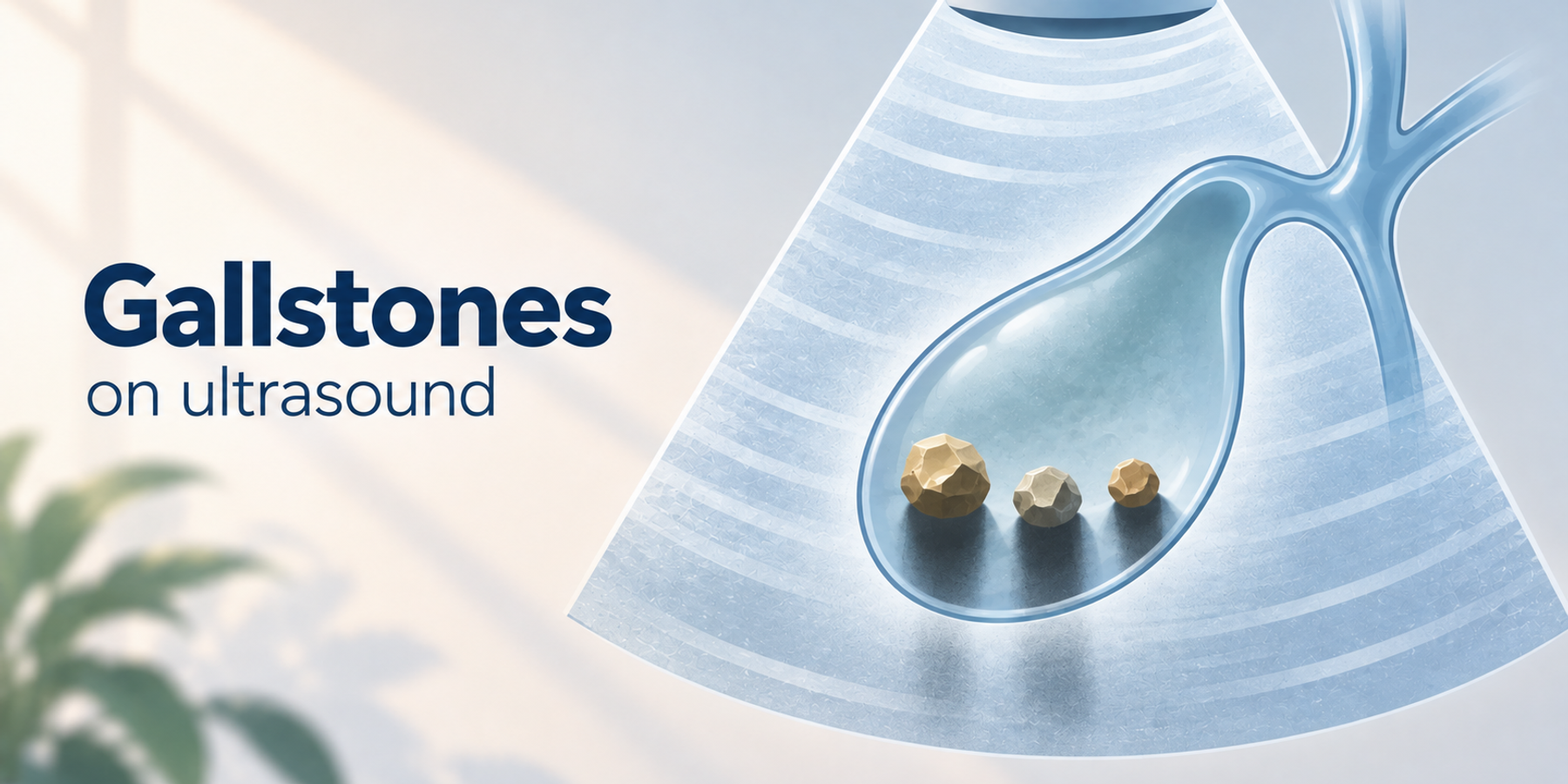
Gallstones on your ultrasound simply means the scan found one or more hard little stones in your gallbladder, and this is very common. Let us break it down. The gallbladder is a small pouch under your liver that stores bile, a fluid that helps digest fat. Sometimes the bile forms hard pieces, like tiny pebbles, and these are gallstones, which doctors also call cholelithiasis. Ultrasound is excellent at spotting them. Here is the reassuring part: a great many people have gallstones that never cause any trouble at all, so-called silent stones, and simply carry them without knowing. Gallstones matter mainly when they cause pain or block the flow of bile. On your report, gallstones are a description of what the scan showed, not automatically a problem needing action. What they mean for you depends on your symptoms, which is your doctor's call.
If gallstones turned up on a report on your WhatsApp and you are picturing surgery already, slow down, because many gallstones need nothing at all. This guide explains what the finding means, when it matters, and what to ask your doctor. And if the rest of the report reads like another language, FlexReport can help. Upload it on app.flexreport.ai and get a plain-language version in minutes.
What are gallstones on ultrasound?
Gallstones on ultrasound are hard pieces that have formed in the gallbladder and that the scan has picked up. They form when the substances in bile fall out of balance and harden, and they can range from tiny grains to stones a few centimetres across. Ultrasound is the go-to test because gallstones show up clearly, often as bright spots that cast a shadow behind them, which is a classic and easily recognised sign. The scan can also show whether the gallbladder wall looks inflamed, which helps your doctor judge whether the stones are causing a problem now (Radiological Society of North America). Finding gallstones is extremely common, particularly with age, and on its own it is simply information, not an emergency.
When do gallstones matter?
Gallstones matter mainly when they cause symptoms, not simply because they exist. Many people have silent stones that sit quietly for life. Trouble usually starts when a stone blocks the outlet of the gallbladder or a bile duct, which can cause pain, or when the gallbladder becomes inflamed. The classic symptom is a gripping pain in the upper right side of the tummy, often after a fatty meal, sometimes spreading to the back or right shoulder, and it may come with nausea. The table below sorts the common situations so you can see where your report might sit, but only your doctor can place you accurately.
| Situation | What it usually means |
|---|---|
| Gallstones, no symptoms (silent) | Very common. Often just monitored, no surgery needed. |
| Gallstones with occasional pain | May need treatment. Your doctor discusses options. |
| Gallstones with inflamed gallbladder | Needs prompt medical attention. |
| Stone blocking a bile duct | More urgent. Can cause jaundice and needs quick care. |
Many gallstones are silent and need nothing. It is the symptoms, not the stones alone, that decide what happens next.
What happens next after this finding?
What happens next depends almost entirely on your symptoms. If your gallstones are silent, your doctor will often simply reassure you and suggest sensible eating, with no procedure at all. If the stones cause repeated pain, the usual solution is a keyhole operation to remove the gallbladder, called a cholecystectomy, which is a common and well-established procedure that most people recover from quickly, and you can live a normal life without a gallbladder. If a stone is blocking a duct or the gallbladder is inflamed, more prompt treatment is arranged. Your doctor may also order blood tests to check your liver if a blockage is suspected. The plan is guided by how the stones affect you, not by the fact that they exist.
A few useful questions to carry into your appointment:
- Are my gallstones causing my symptoms, or are they silent?
- Do I need any treatment now, or can we watch and wait?
- Which symptoms should bring me back to you urgently?
FlexReport is a patient comprehension layer for diagnostic centers, labs, and hospitals. It adds a plain-language second view to clinical reports without altering the clinical report itself. FlexReport operates in India and is built by FlexRad, a unified radiology platform with DICOM and PACS infrastructure across India and the US.