If you have just opened your report and seen the word "abnormal," or a small H or L sitting next to one of your numbers, your heart probably skipped a beat. Take a breath. In most cases, that flag does not mean something is wrong with you.
Here is the short answer to what "abnormal" means in a blood test: it means one of your values fell outside a standard range that the lab prints on the report. That is all the flag is saying. It is not a diagnosis. It is not the lab telling you that you are sick. It is a signal to look a little closer, usually with a doctor, and not a verdict on your health.
This guide explains what the flag actually means, the everyday reasons a result comes back flagged, how to judge whether it is urgent, and the exact questions to ask your doctor. We built FlexReport to do this kind of plain-language explaining for patients, so this is the same calm, jargon-free way we would walk you through your own report.
First, take a breath: what "abnormal" actually means
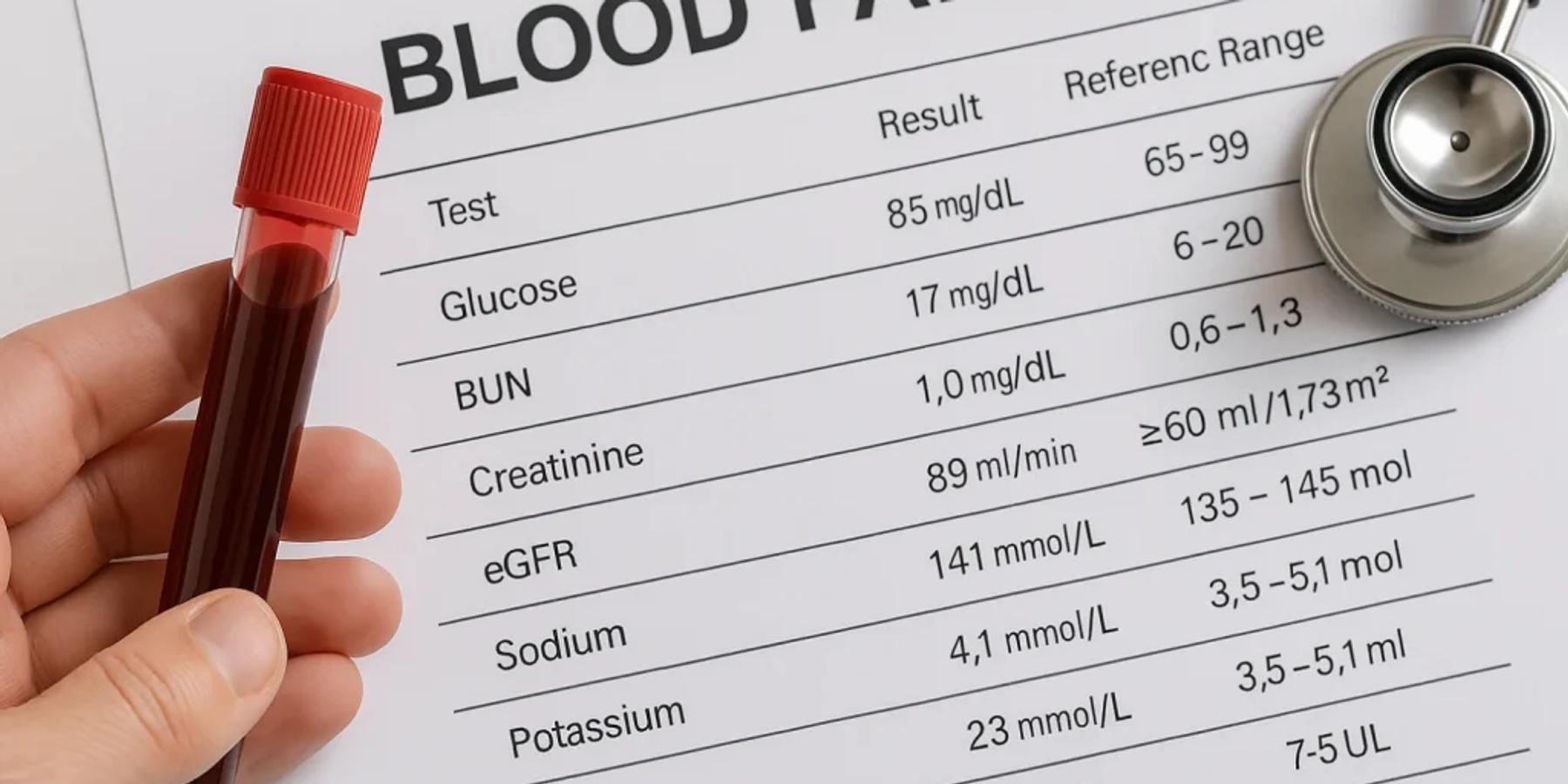
When a lab tests your blood, it compares each result to a printed range called the reference range. Think of it as a band of values that most healthy people tend to fall into. If your number lands inside that band, the report stays quiet. If it lands outside, the lab puts a little marker next to it so it stands out.
That marker is usually a letter. H stands for High, which means your value sat above the range. L stands for Low, which means it sat below the range. So the H flag simply means "this one was higher than the usual band," and a low result simply means "this one was lower than the usual band." Some labs use a star, an arrow, bold text, or the actual word "abnormal" instead of H and L, but they all mean the same thing: this value is outside the printed range, please look at it.
Notice what the flag does not say. It does not say which disease you have. It does not say how serious it is. It does not even say the value is genuinely a problem for you. It only says "outside the band." Everything after that needs a human who knows your full picture.
Why "abnormal" does not mean "sick": the range is just statistics
This is the part almost nobody explains, and it is the part that takes most of the fear away.
A reference range is not a wall between "healthy" and "unhealthy." It is built by testing a large group of healthy people and then drawing the band around where most of them, usually the middle 95 percent, happened to land. The maths of that is simple but surprising: by design, about 1 in 20 perfectly healthy people will fall outside the range on any single test. They are not sick. They are just the normal edges of normal.
Now think about a full body checkup. These often measure 20, 30, even 50 different things in one go. If a completely healthy person does a panel of around 20 tests, there is roughly a 60 percent chance that at least one of them comes back flagged, purely by chance. Do more tests, and a stray flag becomes almost expected. So when you see one H or one L on a long report, the most likely explanation is not disease. It is statistics doing exactly what statistics do.
There is one more thing worth knowing. Ranges are not universal. They can shift with the lab, the machine and method used, your age, your sex, whether you are pregnant, and even the time of day. So your "abnormal" on one lab's report might sit comfortably inside another lab's range. This is also why you should not compare your number against a range you found online. Always read it against the range printed on your own report.
One odd number versus a pattern
If you remember only one idea from this whole article, make it this one. A single value that is slightly off is a very different thing from a pattern.
One borderline value sitting alone, with everything around it normal, usually means very little. A pattern — several related values nudging the same way — is what actually carries meaning.
A doctor reading your report is not really staring at one number. They are looking at the story the whole report tells. The same is true of how far off the value is: a result a hair outside the band is not the same as one sitting far away from it.
So before you spiral, ask yourself a calmer question. Is this one lonely flag on an otherwise clean report? Or are a few connected things off together? You may not be able to judge the answer yourself, and you should not have to. But knowing the question is what stops you from reading one stray number as the end of the world.
The everyday reasons your result came back flagged
Most flagged values have boring, fixable explanations that have nothing to do with disease. Did you eat before a test that needed an empty stomach? Were you dehydrated, or did you gulp a lot of water just before? Did you hit the gym hard the day before, get over a fever last week, sleep badly, or give the sample at an odd hour? Any of these can push a number out of its band for a day and then it quietly settles back.
Here is a simple way to think about it. Some causes are temporary and reverse on their own. Others are worth following up properly. The table below sorts the common ones.
| Often a temporary reason | More worth following up properly |
|---|---|
| You did not fast when the test needed fasting, or ate something just before | The same value stays flagged when the test is repeated |
| You were dehydrated, or drank a lot of water right before the sample | Several related values are off together, not just one |
| A recent heavy workout, gym session, or hard physical work | You also have symptoms that have genuinely been bothering you |
| You were unwell recently, like a fever, infection, or bad cold | The value is far outside the range, not just slightly |
| Stress, poor sleep, or giving the sample at an unusual time of day | Your doctor specifically asks to track it over time |
| Certain medicines or supplements you are currently taking | A new finding that does not match how you normally are |
| A sample handling or lab processing hiccup |
None of this means you should self-diagnose from the left column and move on. It means there is a long list of ordinary reasons before "something is wrong" even enters the picture. Your job is not to figure out which one it is. Your job is to bring the report, and these possibilities, to a doctor who can.
How worried should you actually be?
Let us calibrate this honestly, because "abnormal" feels scarier than it usually is.
Second, your body is part of the report. A small flag with no symptoms, on someone who feels completely fine, sits very differently from a flag alongside something that has actually been troubling you. Symptoms matter, and you are allowed to factor in how you feel.
And here is where being in India works in your favour. You do not have to sit with this for days. In many countries patients wait two or three weeks for an appointment, which is exactly how a stray number turns into two weeks of dread. We do not live like that here. If a result genuinely worries you, you can walk into a nearby clinic or your family doctor the same evening or the next morning, report in hand, often within a couple of hours. That access is a real advantage. Use it. A ten minute conversation with a doctor will settle far more than ten browser tabs ever will.
What to do next, step by step
If your blood test showed an abnormal result, here is the calm version of what to do.
Read the result against your own report and your own story, not a stranger's. Then see a doctor, which, as we said, you can usually do within hours here. Carry the physical or digital report and your list of questions. Quite often the very next step a doctor suggests is the simplest one: repeat the test, sometimes after fasting or after a few weeks, to see whether that lonely flag was just a one-off. If it was, the whole thing ends right there.
Questions to ask your doctor
Walk in with these. They turn a worried, one-sided visit into a real conversation:
- Is this one value off, or is there a pattern across my report?
- Could something temporary have caused it, like not fasting, a recent illness, or my current medicines?
- Does this need a repeat test, and if so, when and how should I prepare?
- Is this something to act on now, or to keep an eye on over time?
- Do my symptoms or my history change how you read this number?
Where FlexReport fits in
This whole confusing gap — the moment you are holding a report you cannot read, alone and a little scared, before you have spoken to a doctor — is exactly what FlexReport was built to close.
FlexReport sits on top of your diagnostic centre's existing system. It takes the same report and rewrites it in plain language, in English or your own language, with each finding explained simply and a ready list of questions to take to your doctor. It does not diagnose, and it does not replace your doctor. It only makes sure you walk into that appointment understanding your report instead of fearing it. If your lab or imaging centre uses FlexReport, you will see a simplified version sitting right alongside your report. If they do not yet, it is worth asking them about it.